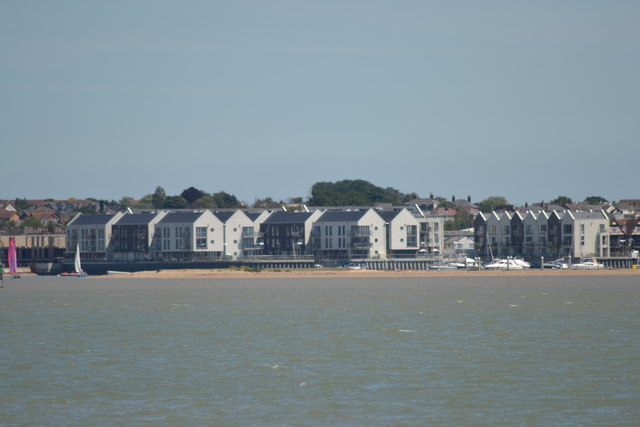

A Brightlingsea renter who has spent five years looking after his home — replacing carpets, repainting, and fitting new smoke alarms — says his landlord is still putting the rent up, and it could leave him homeless.
Dan Glee’s post to the Spotted: Brightlingsea Facebook group this week struck a chord, drawing 45 reactions and more than 40 comments within hours.
“I’ve been renting my property for around five years, and throughout that time I’ve always taken pride in looking after it,” he wrote. “Despite all of this, my landlord is still putting the rent up. When I asked why, I was told it was to keep the rent in line with the market rate.”
“Surely loyalty and having a good tenant should count for something?” he asked. “For me, this isn’t just about paying more money. It could genuinely leave me homeless.”
A national squeeze, felt in Brightlingsea
Glee’s frustration sits within a wider national picture. The average UK private rent rose 3.8% to £1,400 a month in the year to August 2026, according to the Office for National Statistics, with the average English rent up 4.0% to £1,459 (fact-checked: confirmed — ONS).
The town’s renters clearly feel the squeeze. Serena Mccallum wrote that her rent “is going up again next month,” adding that she was “not really keen on it either” in her four-bedroom Brightlingsea townhouse.
Landlords and tenants square off
The comments quickly split into two camps.
Some defended the landlord’s position. “The owner does what they require as their property,” wrote Jeffrey Stevens. Sarah J. Hadley argued that “mortgage payments and other costs have gone up so they have to increase the rent payments to cover.”
Graham Mestre, a landlord with properties in the area, said he had deliberately held his tenants’ rent down for five years — “over £400 pcm less than it should be” — but warned that “the government have brought a heap of new tariffs the landlord has to pay, so inevitably things are going to have to change very shortly.” Mestre’s figures are his own account and could not be independently verified (fact-checked: unverified — attributed to Graham Mestre).
Others had no patience for that argument. “A rent increase is a choice,” Cilla T Webb countered. “What part of the difference between requirement and choice do you not understand?”
Shauna Severn told a familiar cautionary tale: “My aunty put in all new underfloor heating, done the place up like a palace, and the landlord said the house rent was now worth more and she couldn’t afford the increase and had to move out. It beggars belief.”
A blame game over decades of policy
The debate broadened into a wider argument about who created the housing market Brightlingsea renters now face.
Denis Borley blamed Margaret Thatcher, claiming she “created the uncontrollable rental market.” Sas Walker offered a more measured take, pointing to the right-to-buy scheme, which sold off council housing “without providing alternative replacement council property,” and the deregulation of the rental market (fact-checked: partially confirmed — right-to-buy and rental market deregulation in the 1980s are well documented; the extent to which they are solely responsible for today’s rents is a matter of political debate).
Roger Kemble traced the problem to the growth of buy-to-let: “This all started years ago when some bright politician decided that buy to rent was the way to go.”
Michelle Joanne offered a rare note of hope, describing a landlord who kept her rent at £550 a month for nine years. “Some landlords do not care about the tenants and how much they have looked after the property,” she wrote. “Your landlord is greedy.”
What renters can do
Beverly Saunders struck a practical note: “Depends on what your contract says.” Rent increases for private tenants must follow the terms of the tenancy agreement and are typically limited to once a year, with proper notice.
At the time of writing, Glee had not said whether he planned to challenge the increase or look for another home.
The exchange is the latest sign of how the cost of renting — and the question of who bears the burden — has become one of the most discussed issues in the town’s community groups.