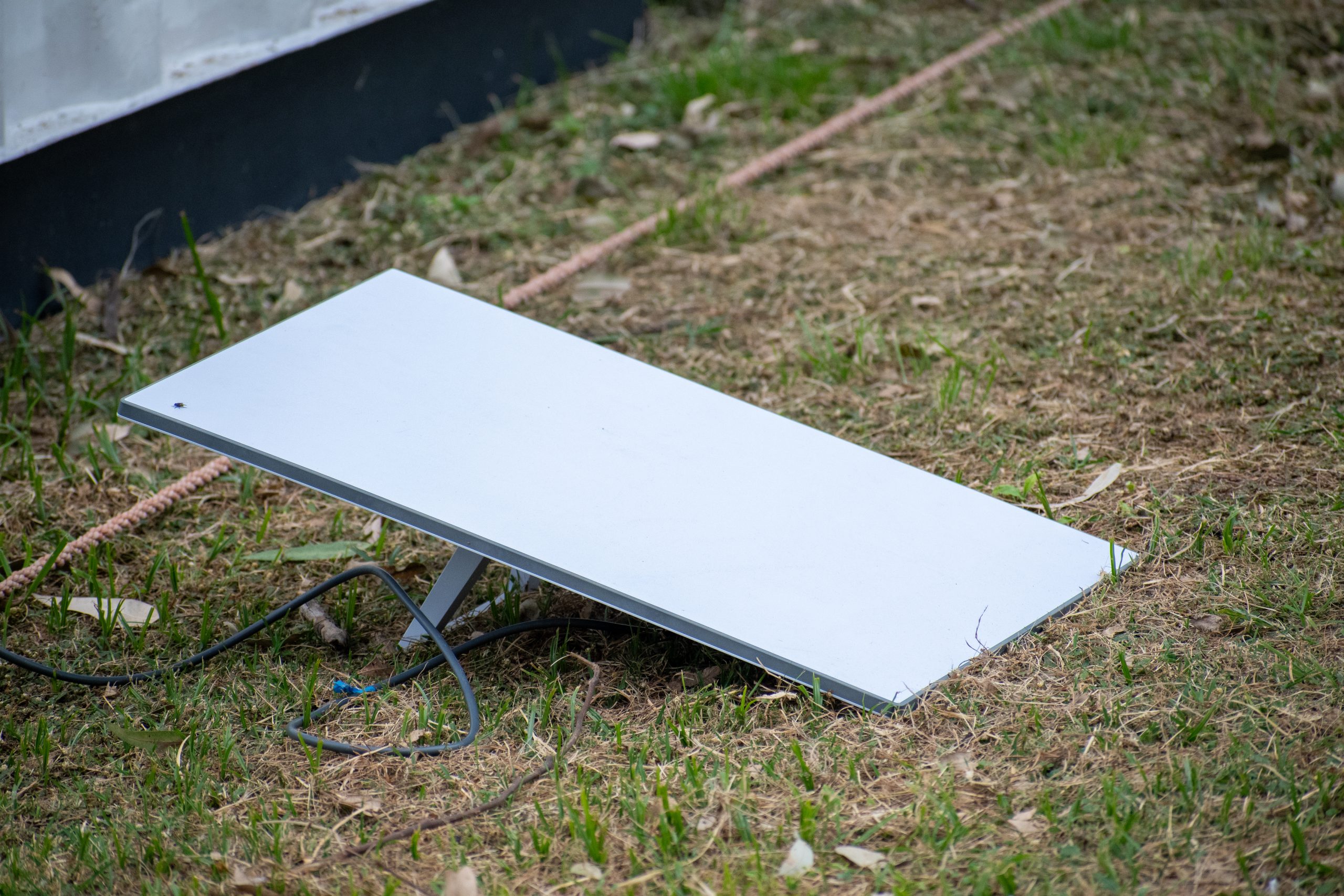
A simple question on a local Facebook group has revealed just how much a small coastal town like Brightlingsea is wrestling with the same big questions as governments and defence departments: how fast is the internet, who controls it, and what are we willing to pay — in cash and principle — to get online.
It all started when Ted Preedy asked the “Official Spotted: Brightlingsea” community group a straightforward query: “Has anyone tried the Starlink internet for use in Brightlingsea? Is it any good?”
The thread that followed was a vivid snapshot of modern Brightlingsea, where boats, broadband blackspots and billionaires all collided in a single debate.
The practical verdict: fast, but not flawless
The response from users of Starlink, the satellite internet service operated by Elon Musk’s SpaceX, was overwhelmingly positive on the technical front.
Paul Davis offered one of the clearest endorsements. Stuck with regular providers who could only deliver 25–30 Mbps to his home, he now sees speeds of 300–400 Mbps with Starlink. His verdict was simple: “Fantastic service.”
Graham Parker agreed. “Excellent. Not cheap but more than does the job,” he wrote.
The marine angle mattered enormously in a sailing town. Paul Hammond reported that his nephew uses the kit on his boat and it works superbly — not only in Brightlingsea but out at sea, with no issues. He called it an “excellent bit of kit.” Tony Curzon Price, who lives in Tower Street, uses Starlink both at home and occasionally on his boat, and remains very pleased with it.
Other users chimed in with similar experiences. Harry Roe in Alresford has had it for nearly four years and rates it highly. John Smith has had it a few months and finds it very good. Michael Barrington summed it up: “Works very well.” Martin Brooks said he uses Starlink as a backup across numerous properties: “It’s excellent everywhere.”
Neil Hicks praised the entire product range, whether mobile or fixed, and noted how the companion app helps users align the dish for a strong signal. He did, however, confirm a key limitation raised by John Bergstrom-Potter: the service does suffer during severe storms. “It’s to be expected,” Hicks said, adding that he uses it in France too. Kevin Purser underlined the fundamental rule: “As long as it’s got a clear line of sight it is brilliant.” Bev Wallis simply added: “It’s great in Great Bentley.”
The full-fibre escape hatch

For some residents, the conversation wasn’t about satellites at all. Darren Smith highlighted an alternative that side-steps both the speed question and the political one: “We have BeFibre and have suuuper fast internet. 900 [Mbps] upload and download. Cheap too. And Musk doesn’t get a penny of it.”
That option — full-fibre to the premises — is spreading across parts of Essex. Brightlingsea’s fixed-line broadband is a patchwork. Some addresses can access gigabit speeds through providers like BeFibre or the wider Openreach network. Others, as Paul Davis’s experience shows, are still waiting for a modern connection and remain stuck on sluggish copper lines. County Broadband, an Essex-based firm headquartered near Colchester, is also wiring up rural communities that have long been left behind. Where fibre reaches, it offers a powerful, Musk-free choice.
The political thread: speed versus sovereignty
But not everyone can wait for a cable to arrive, and not everyone is comfortable with the satellite option. John Keeling took a firm political stand: he said he would not knowingly support anything Elon Musk does, wished his ventures would fail, and objected strongly to Musk’s politics and his influence over UK and state affairs.
The objection drew both backing and pushback. Nick Sparrow supported the anti-Musk stance on political grounds. Glenn Harmsworth, however, argued the post was simply about broadband and a yes-or-no answer would have been enough.
Martin Brooks, despite his own glowing review of the service, acknowledged the dilemma. He said he admired the anti-Musk stance but noted that he rated Tesla and Starlink as “unparalleled,” and pointed out that Musk owns only a minority share of each company.
Then came a more strategic objection. Russ Woodford captured a worry that extends far beyond Brightlingsea: Starlink is “very good until Elon decides we can’t have it anymore.” The dependency on a single, politically active owner is not just online cynicism. During the war in Ukraine in 2022, Musk acknowledged restricting Starlink access in a geofenced area, disrupting a planned military operation — a stark real-world example of one person’s discretion over a critical communications network. Governments and analysts have since warned about the risks of over-reliance on one private satellite provider.
Justin Brown countered simply: why would Musk cut people off? And if you don’t like the service, don’t use it. The debate then spilled wider into a broader argument about billionaires and wealth, involving several other residents, but the core broadband question remained.
A town in miniature
For Brightlingsea, the Starlink question is both intensely local and surprisingly global.
The town’s character as a sailing hub on the River Colne makes satellite internet that works out on the water a genuinely practical draw — fixed fibre will never follow a boat to sea. For landlocked homes in connectivity blackspots, however, Starlink can be the difference between buffering and streaming, between a failed video call and a crisp one. The monthly cost, running from about £35 to upwards of £75 plus a hardware fee of around £299, sits alongside the standard caveats: clear skies are needed, and heavy weather can interrupt service.
The thread beneath Ted Preedy’s unassuming question showed that in one small Essex community, residents are weighing precisely the same trade-offs that national strategists confront: speed, cost, control, and the character of the man whose satellites beam the signal down. Fast internet is a necessity, but how it arrives — and who profits — has become a choice with more layers than anyone might first expect. For those who can get it, full fibre like BeFibre offers a way out of the dilemma entirely. For others, the megabytes arrive from orbit, and the debate will rumble on as long as the signal holds.
Source: a public post by Ted Preedy in the “Official Spotted: Brightlingsea” Facebook group, and the comment thread beneath it. Background on UK Starlink pricing and performance, BeFibre and County Broadband full-fibre rollout, Project Gigabit, and the 2022 Ukraine Starlink episode drawn from public reporting.
Images: “Starlink antenna at St. Albans” by BugWarp, CC BY-SA 4.0; “Brightlingsea Harbour” by Roger Jones, CC BY-SA 2.0 — both via Wikimedia Commons.
Written with deepseek-v4-pro (via OpenRouter) on 27 June 2026.