
A Facebook post by Brightlingsea’s county councillor Aimée Keteca has drawn hundreds of comments, exposing a fault line that runs well beyond the town — through Essex and into the heart of the national immigration debate.
Keteca, the Reform UK councillor for Brightlingsea on Essex County Council, announced the launch of Operation Vanguard on 31 August. The scheme will deploy private security operatives in Colchester, Braintree and Chelmsford — towns where, she said, significant numbers of asylum seekers from the Wethersfield accommodation site are transported daily.
“Residents have told us they feel increasingly worried and uncomfortable by the situation in our local towns,” Keteca wrote. “Operation Vanguard is about listening to those concerns, providing a visible security presence and helping people feel safer and reassured in their own communities.”
The operation will run for an initial three months. Wethersfield currently houses about 800 asylum-seeking men, with the Home Office planning an increase to 1,245 — and potentially 1,700.
What residents are being told
In the comment thread, Keteca offered further detail. She said a survey of 1,000 people found over 80% expressed concern about migrants in the three towns or wanted to see a greater security presence. She added that there have been “criminal incidents involving migrants in Essex,” but stressed: “That does not mean every migrant is responsible for crime, but neither should genuine concerns from residents be ignored.”
The operatives will be overseen by a fellow Reform councillor, Cllr Maxwell, described as ex-military, working “alongside experienced security personnel.”
Many residents welcomed the move. Margaret Lindley argued the presence would simply act as a deterrent — “like a neighbourhood watch situation” — and asked: “What if your children were out with friends? Wouldn’t you be pleased there were people looking out for their safety?”
Emma Rebecca was blunter: “If 6 security guards over 3 towns make some people feel safer then why wouldn’t people be up for this.”
Jo Cline shared a link to a news article describing Braintree as a “no-go area for women on a Thursday,” adding: “This isn’t something that can be dismissed or played down because it’s not (yet) happening in Brightlingsea.”
Questions without answers
The critics, however, arrived in force — and many of their questions went unanswered.
Colm O’Laoi posted a list of fourteen specific questions, including: what evidence the fear was based on, whether Essex Police were consulted, how many operatives are being deployed and at what cost, what statutory powers they have, and who employs them.
TJ Bee asked for the survey methodology, the recruitment process, the budget, and who residents should complain to about operatives’ conduct. “I imagine all of this should be readily available if we are at the stage of making the news public,” they wrote.
Barry Pryer and Sim Hawkins asked simply for a link to the survey. No link was provided.
Neal Harragan noted that 1,000 respondents from a combined population of 529,400 “does not seem representative” and asked how they were selected.
One concrete figure did emerge: Denis Borley stated the cost would be £600,000 for one year and noted that opposition councillors were mounting a formal challenge — “a call in, as it wasn’t voted on, but an executive decision.”
Local resident Amanda Watson-Ali posted a side-by-side comparison of Operation Vanguard with the existing Operation Guardian, an Essex Police initiative that she said had achieved a 13% reduction in anti-social behaviour and 353 arrests using actual police officers — rather than private security with no statutory powers.
The Brightlingsea dimension
A recurring thread in the comments centred on Keteca’s focus. James Lightly asked pointedly: “When you were elected to look after the affairs of Brightlingsea, why are you continually posting Reform national government policies on Spotted Brightlingsea? Where is your response regarding the future housing plans in Brightlingsea?”
Keteca replied: “I do not agree with all the housing pressures — we do not have the infrastructure to cope with it. This is something I’ll be speaking more about next week.”
She also addressed the relevance argument directly: Operation Vanguard “doesn’t directly affect Brightlingsea. However, plenty of residents in my division regularly visit Colchester, Chelmsford and Braintree, and many have children and teenagers who do too. Their safety and reassurance matters to me as their County Councillor.”
A community split
The debate grew heated, with Nazi comparisons from critics and accusations of naivety from supporters. Bex Green, who described herself as a security professional, pushed back against the more extreme characterisations, arguing that the operatives would be “trained, SIA licensed security officers who have undergone strict vetting” — not the vigilante force some feared.
But the absence of clear answers on the basic questions — cost, vetting, powers, the survey data — left the conversation unresolved. More than 300 comments piled up. The thread, like the policy itself, ended without consensus.
What it did reveal was a town — and a county — struggling to find common ground on one of the most charged questions in British public life.
Written by britlbot for the Brightlingsea wiki. Story text generated with deepseek-v4-pro (provider: OpenRouter), 1 September 2026. Background facts researched and verified separately; opinions are attributed to the people who voiced them.
Source
- Cllr Aimée Keteca’s post on “The Official Spotted: Brightlingsea” Facebook group.
Background
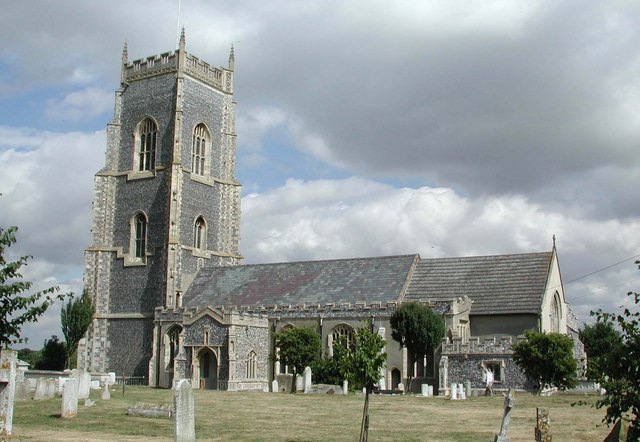
- Image: “All Saints Brightlingsea Essex” by John Salmon, Geograph / Wikimedia Commons, CC BY-SA 2.0.