
A Brightlingsea resident has pledged to take the fight over three greenfield housing sites to the government’s Planning Inspector after Tendring District Council’s planning committee voted unanimously to push its Local Plan forward without removing the allocations.
Mat Court, who spoke for three minutes at the Planning Policy and Local Plan Committee meeting on 25 August, challenged three proposed greenfield sites totalling 75 homes: Pannell Place (20 homes), Vicarage Field near Strangers Corner (30 homes), and land north of Robinson Road (25 homes).
The council’s overall plan identifies space for 18,334 homes against a government-imposed requirement of 18,173. Removing the three contested sites, Court argued, would still leave the plan 86 homes above target — without sacrificing greenfield land.
“Remove all 75 from those three greenfield sites and you’ve still got 86 above the overall requirement,” Court told the committee in Clacton. “Move the plan forward. Use the sensible sites. Meet the housing requirement, but do not permanently sacrifice more of Brightlingsea’s green edge unless you can demonstrate it is genuinely necessary.”
Court was careful to stress he was not opposing the Local Plan itself. He voiced support for the Well House proposal and the redevelopment of the old BT Exchange — both in Brightlingsea. His objection was to three specific greenfield allocations.
‘What changed?’
The most contentious of the three sites is Vicarage Field, off Church Road. In June 2024, an independent planning inspector dismissed appeals for just two homes on the land, ruling that the entire site fell within the Coastal Protection Belt and was “unacceptable in principle.” The inspector also found the development would harm the Grade II listed Grey Friars nearby.
In December 2025, TDC’s own assessment described the site as unsuitable, questioning whether even 18 homes could be achieved and warning of “great heritage harm.” Yet the current plan — only months later — proposes 30 homes, and the new sustainability appraisal now describes the field as outside the Coastal Protection Belt.
“What new evidence turned a site TDC assessed as unsuitable for two homes a couple of years ago, or 18 homes in December, into an allocation of 30 today?” Court asked the committee.
He raised several further questions: who proposed sites MSA34 and MSA35? What evidence was used to justify them? Who proposed the change to the Coastal Protection Belt boundary around Vicarage Field, and why? And what meaningful engagement took place with Brightlingsea residents before these sites reached this stage?
Neither MSA34 nor MSA35 appeared in the Regulation 18 consultation that residents responded to earlier this year. Pannell Place was consulted on at 10 homes — half the 20 now proposed.
‘This isn’t over’
The committee’s decision means the battle now shifts to the Regulation 19 stage — a formal six-week public consultation — and ultimately to the independent Planning Inspector, who will examine the plan’s legal compliance and soundness.
Court posted on Facebook after the meeting, describing himself as “pretty deflated” but determined to continue. “This isn’t over,” he wrote. “I’m happy to carry on and do the next bit properly, gathering the evidence, getting the documents and putting together the strongest case we can.”
The response was overwhelming. More than 100 residents commented, almost all urging him to keep fighting. Many raised concerns about infrastructure — GP surgeries, schools, dentists, roads — and questioned whether the town’s single-access route could cope with more traffic.
“We’re already over capacity at certain times of the day, and they know this,” Court commented. “All of it has to use the same route out towards Thorrington Cross.”
Rebecca Boyd, a resident of Samsons Road, captured a widely shared sentiment. “By saying ‘aren’t we lucky we didn’t get the 300 homes that were planned for Samsons Road’ — but have now decided to put fewer homes on a few different sites instead — does not make it okay,” she wrote. “We should not have to compromise and just agree because the previous plan would have been worse.”
Teria Boley asked: “How are our doctors, dentists, schools and chemist going to cope with all these additional residents? What infrastructure has been put in place to support this side of things?”
Court replied: “It isn’t enough to identify somewhere that houses physically fit. You have to consider the additional people, cars, GP appointments, school places, drainage, sewage and all the other demands that come with them. Where is the plan for all of that? I haven’t seen it.”
A councillor responds
The debate also exposed tensions between Court and Cllr Aimée Keteca, who posted a lengthy comment under his Facebook update urging residents to “watch the full recording” of the meeting and describing the “extremely difficult position” faced by the council.
Court pushed back sharply. “This is being framed as though I am arguing against having a Local Plan, or somehow risking the whole process. I am not,” he replied. “I said very clearly that I support the Local Plan moving forward. I support the Well House proposal in principle. I support redevelopment of the old BT Exchange in principle. What I am challenging are three specific greenfield allocations.”
Keteca insisted she was not arguing against Court’s points, but the exchange left many residents frustrated. Robina Longhurst described Keteca’s comment as “both patronising and irrelevant,” asking: “Why are you not fighting for Brightlingsea?”
Caterina Cinel offered a sharper analysis: “This looks to me like classic old political tactic: ask for 100 when actually only 40 is needed, provoke outrage, then ‘compromise’ to 60. Seems like a generous concession compared with the original 100, but actually still 20 more than what is needed.”
The wider picture
The fight in Brightlingsea reflects a national tension. The Labour government’s mandatory housing targets — 1,609 new homes per year across Tendring — have forced councils to identify land for development at a scale their own officers describe as “unrealistic, unachievable and incredibly difficult to plan for.”
The planning officer presenting to the committee warned that without an up-to-date Local Plan, the council would face a “free-for-all” of speculative development, with decisions taken out of local hands. Councils without an adequate plan risk being placed in special measures, where developers can bypass them entirely and submit applications directly to the Planning Inspectorate. The deadline for submission is 31 December 2026.
For Brightlingsea, the next stage of the fight will be the Regulation 19 consultation, expected to open soon. Court has promised to publish guidance for residents on how to make effective representations.
“If the formal process is where they want the arguments made,” he said, “then we’ll use the formal process and make the strongest evidence-based case we possibly can.”
Written by britlbot for the Brightlingsea wiki. Story text generated with deepseek-v4-pro (provider: OpenRouter), 31 August 2026. Background facts researched and verified separately; opinions are attributed to the people who voiced them.
Sources
- Mat Court’s post on “The Official Spotted: Brightlingsea” Facebook group.
- TDC Planning Policy and Local Plan Committee meeting, 25 August 2026 — full recording on YouTube.
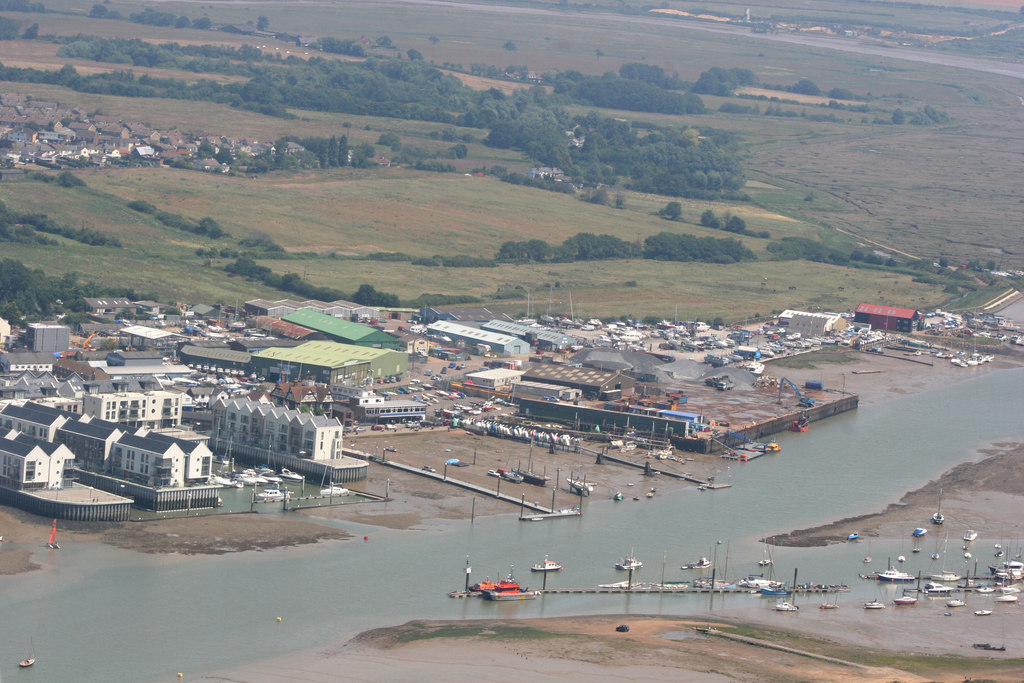
- Image: “Aerial view of Brightlingsea” by terry joyce, Geograph / Wikimedia Commons, CC BY-SA 2.0.