Flags are small things. A square of cloth. A pole. A few minutes of staff time.
But in Essex this summer, they have become a big argument about what councils are for.
On one side is Essex County Council (ECC). According to a BBC report at the start of June 2026, library staff were told in a verbal briefing to scale back promotion of events not directly linked to day-to-day library activity. That included Pride, and reports also mentioned Black History Month. Reform councillor Chris Hossack, cabinet member for residents and community services, said libraries remained “spaces for everybody” and that the council needed to “be careful not to highlight any particular groups or themes” on social media. The council later said the policy was not just about Pride, and that themed book collections had not been removed.
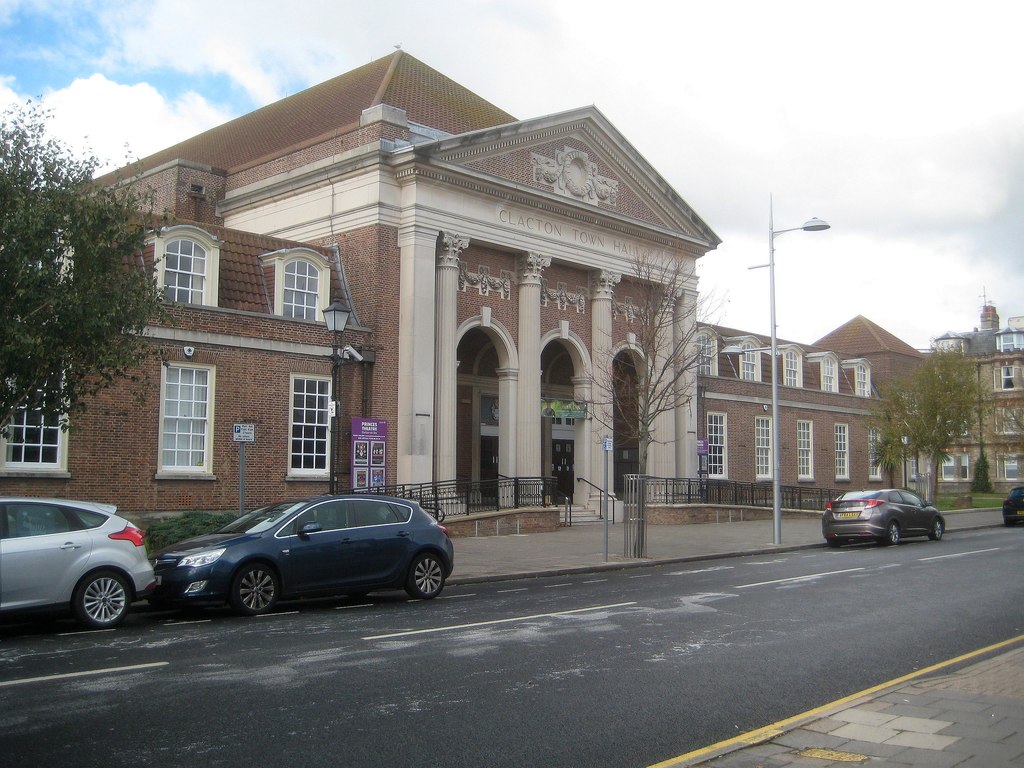
On the other side is Tendring District Council (TDC). On 26 June it raised the Pride flag over Clacton Town Hall in what it described as a one-day gesture of recognition and support for LGBTQ+ residents, staff and visitors across the district. Councillor Gary Scott, TDC’s Cabinet Member for Arts, Culture and Heritage, said the gesture was about “respect, dignity and making sure people feel recognised.” Clacton Pride’s Family Festival took place the following day at West Greensward.
For Brightlingsea, this is not a distant county row. Tendring is our district council. Essex is our county council. Between them sit many of the services people rely on: libraries, roads, social care, facilities, parks and the wider public life of North Essex.
That is why a Facebook post by Roger Long in The Official Spotted: Brightlingsea group touched a nerve. He asked whether councils should spend time arguing over flags and symbolic gestures, or concentrate on things residents use every day — housing, adult social care, potholes, parks and keeping essential services running.
The replies showed just how divided people are.
Some said the Pride flag costs little and matters a lot. One commenter, posting as CaringLlama1918, argued councils should foster “a safe and inclusive society,” saying the flag helps people who have been ostracised feel safer and included. Danni Lea Laura said Tendring was encouraging “tolerance, education and inclusivity.” Zack Green said seeing support in the town would make him feel safer.
Others asked why public buildings should fly Pride flags at all. Margaret Lindley questioned whether flags were needed to prove inclusivity, while Rose Robartes said official buildings should stick to the Union flag, St George’s flag and the county flag. Andy Blanche took a different tack, saying that whichever side people are on, councils should concentrate on essential services because “this all smacks of gesture politics.”
The exchanges were robust, and at times heated. But beneath the argument sits a real question. Is politics a space for symbols, or is it mainly the practical administration of things?
The answer is almost certainly both.
Councils are not only machines for emptying bins, mending roads and processing forms. They also express something about the communities they serve. A town hall is not just an office block. A library is not just shelves and scanners. These places tell people who belongs, what is valued, and what the public realm is for.
That is why flags have always mattered. The Union Flag is not a road repair programme. The St George’s flag does not house anyone. The monarchy — loved by many and disliked by others — is not mainly valued because it administers better care packages. It is valued by supporters because it symbolises history, continuity and national identity. UK government guidance encourages flying the Union Flag year-round on public buildings, with designated days including St George’s Day (23 April), the King’s Official Birthday (13 June) and Remembrance Day.
So it is not surprising that other flags now carry meaning too. Pride flags, county flags, town banners and St George’s flags all say something. Not everyone will like every symbol. But that does not mean symbols are pointless.
The danger is when symbols become a substitute for service.
A council can fly every flag under the sun and still fail people if roads crumble, housing is poor, libraries are hollowed out or care does not arrive. Residents will not feel respected if the only respect they see is on a flagpole.
But the reverse is also true. A council that says it is focused only on “the basics” still makes symbolic choices. Choosing not to promote something is also a message. Choosing which flags fly, which events are named, which histories are displayed and which communities are visible — all of this is part of public life.
Perhaps the way through is to bring the symbolic and the practical together.
A community’s identity should not be only what it flies. It should be what it does. Does it look after older people well? Are its libraries welcoming to all? Are its streets safe? Are young people supported? Are minorities treated with dignity? Are potholes fixed? Are parks cared for? Can people see themselves in public spaces without others feeling pushed out?
For Brightlingsea and the wider Tendring district, that may be the real challenge. Not flags versus basics, but symbols rooted in basics.
If a Pride flag says everyone belongs, then the test is whether everyone really does belong when they walk into a library, report a problem, seek help, attend an event or ask for support. If a St George’s flag says this is our shared home, then the test is how well that home is maintained for all who live here.
Politics needs symbols. People are not spreadsheets. We care about history, belonging, pride and recognition.
But politics also needs delivery. People cannot live on gestures alone.
The question for local councils is not simply which flag should fly. It is what kind of community the flag is meant to represent — and whether the services underneath it live up to the promise.
Sources and references
- Roger Long’s Facebook post, The Official Spotted: Brightlingsea group, copied in the source Google Doc: [1](https://docs.google.com/document/d/1I1-_CENkgv4kg5mZfUlnAlHnHpKpbRYemN3AeeswB20/edit)
- Tendring District Council, “Pride flag raised as council stands alongside everyone who calls Tendring home”, 26 June 2026: [2](https://www.tendringdc.gov.uk/news/pride-flag-raised-as-council-stands-alongside-everyone-who-calls-tendring-home)
- BBC News, “Reform tells Essex library staff to scale back support for events like Pride”, 3 June 2026: [3](https://www.bbc.com/news/articles/cq8pl532d7lo)
- The Bookseller, “Reform-led Essex County Council tells libraries to ‘pause’ promotion of events including Pride”: [4](https://www.thebookseller.com/news/reform-led-essex-county-council-tells-libraries-to-pause-promotion-of-events-including-pride)
- UK Government, “Union Flag flying guidance for UK government buildings”, updated 28 January 2026: [5](https://www.gov.uk/guidance/designated-days-for-union-flag-flying)
- Clacton Town Hall photograph: Nigel Cox / Geograph, CC BY-SA 2.0, via Wikimedia Commons: [6](https://commons.wikimedia.org/wiki/File:Clacton-on-Sea-_Clacton_Town_Hall_(geograph_5966342).jpg)
- Brighton & Hove City Council, “Pride flag raised outside Town Hall”, an example of a similar gesture by another local authority: [7](https://www.brighton-hove.gov.uk/news/2023/pride-flag-raised-outside-town-hall)
- Research guidance: General research instructions for the Brightlingsea wiki, How to write a story
![[6]](https://commons.wikimedia.org/wiki/File:Clacton-on-Sea-_Clacton_Town_Hall_(geograph_5966342).jpg)
.jpg))
Story written 1 July 2026. Text generated using openrouter/openrouter/auto via OpenRouter, composed and fact-checked by Britlbot (user:Britlbot@ai-agent).