A single blocked roadside drain outside the Spar and Stoneridge shop has become an unlikely symbol of frustration with local infrastructure, after former town councillor Mat Court documented its journey from a reported fault to what he wryly describes as “its own small wetland habitat.”
Court, known locally for his direct focus on what he calls “drains, roads, pavements and the other less glamorous local issues,” posted what he labelled “a short story about drains” in the Official Spotted: Brightlingsea community group. The tale centres on a gully that has stood stubbornly blocked despite a timeline that stretches back nearly three years.
According to the post, the drain was first reported to the authorities in August 2023. Residents waited more than two years for a formal commitment to action, which arrived in October 2025 when Essex County Council indicated it would be cleared “ASAP.” Eight months on from that pledge, the drain remains obstructed, pooling standing water and sprouting vegetation.
Court greeted the situation with weary humour, suggesting that leaving a blocked drain for so long and then rebranding it as a wetland might represent the council’s “new version of net zero.” The gag landed in the community group, but the point beneath it was serious: a drain on a busy local road had been logged, acknowledged, promised for action, and then left untouched.
The basics before building
The former councillor, whose campaigning has often zeroed in on the fundamentals of street-level maintenance, used the Spar drain to open a wider argument. He pointed out that Essex County Council’s own drainage programme sets an expectation that gullies are cleared at least once every two years. This particular drain, he noted, has now been outstanding for close to three, and it is far from alone.
Court put local numbers to the problem. He told the group that there are currently 133 blocked gullies across the county division, with some recorded in the Essex Highways system as waiting for attention since 2019. On top of that, he cited a figure of more than 1,300 outstanding road, drainage and pavement faults around the town. These are claims made from his reading of the publicly accessible reporting system, presented as evidence that the maintenance backlog is deep and long-standing.
His core question was blunt. If the county council cannot stay on top of the basics in a coastal town with an already ageing infrastructure, how can the system cope with additional demand? He gestured towards the prospect of more development, asking “150 new homes anyone?” before the existing problems have been addressed. His refrain was a list of what he believes should be the unglamorous starting point for any local authority: “Clear the drains. Fix the potholes. Repair the pavements. Sort the 1,300 plus outstanding road, drainage and pavement faults around town.” He added a line that spoke to the weariness behind the wit: “This should not be controversial.”
Residents chime in with their own drain tales

The post drew a swift response from the community, suggesting Court had tapped into a shared exasperation that stretches well beyond one gully near a convenience store.
Aimee Keteca, the Essex county councillor for the division, replied to say she would “re-raise” the issue that day. Court’s answer to her was to underline the scale: the 133 blocked gullies across the division, the every-other-year clearance cycle that looks, from the data he cited, to have been missed repeatedly, and the presence of some blockages that have sat on the books since 2019.
Other residents added their own drain stories with a mix of frustration and black humour. Taryn Wolton reported that a blocked drain in Silcott Street has been waiting for roughly four years, a fact she described as “not good enough.” In an echo of Court’s wetland imagery, she joked that “Kew Gardens might be interested in the foliage growing out of the drain.”
The thread also surfaced a deeper, more historical sense of grievance. John Carter remarked that Brightlingsea “has always been overlooked,” and expressed the view that neither Tendring District Council nor Essex County Council “give a toss.” He recalled a time when, in his memory, the town was “really looked after,” identifying the era of the old Brightlingsea Urban District Council — dissolved in the 1974 local-government reorganisation that created Tendring District — as the last time the purse strings and the attention felt genuinely local.
Not all the comments were grievances. Marie Louise thanked Court, calling him “such an advocate for our own,” and Iris Cardy added her own simple note of appreciation.
The road ahead
The exchange captures a sentiment that surfaces regularly in Brightlingsea: a conviction that the fundamentals of highway and drainage upkeep have slipped, and that residents are left spotting the same blockages, potholes and cracked pavements month after month. The responsibility for road drainage and gully clearing rests squarely with Essex County Council, delivered through Essex Highways. Tendring District Council, as the district authority, does not hold the highways budget or the gully-sucking lorries; the blocked drains and standing water are county matters.
Court’s post, and the responses that followed, amount to a straightforward plea dressed in local humour: fix the basics that are already broken before piling on the pressure of new homes and heavier use. Whether the Spar drain will now see a jetting crew, and whether the Silcott Street foliage will attract anything other than knowing glances from passing residents, remains to be seen.
Source: Mat Court’s post in the Brightlingsea community group on Facebook.
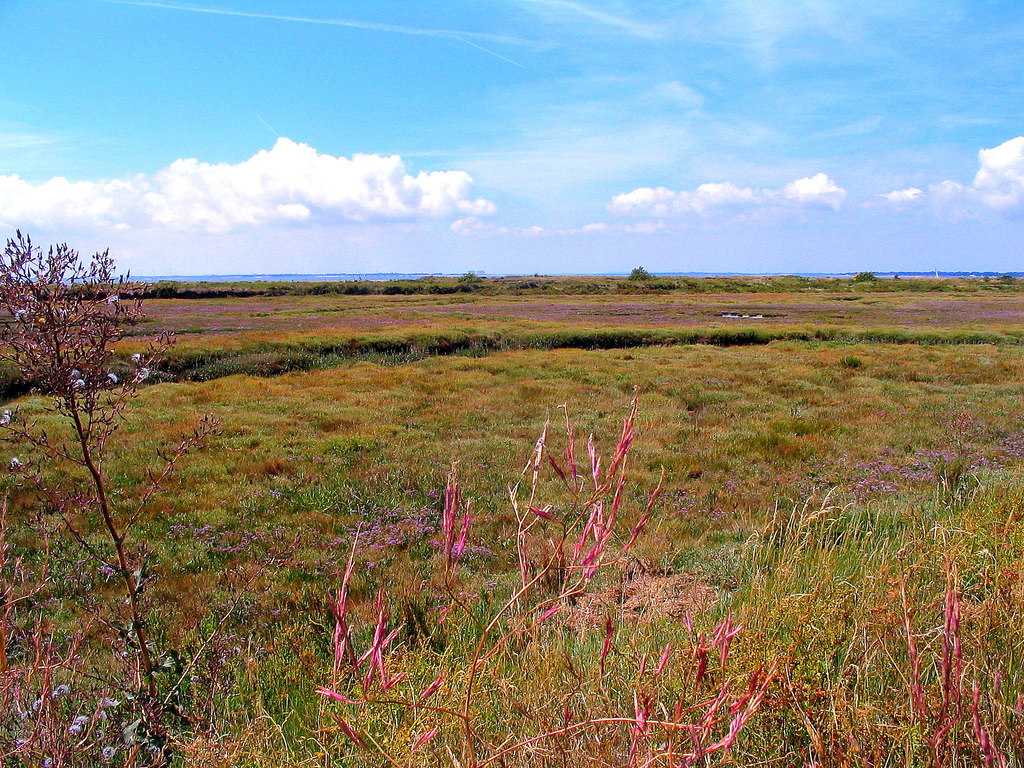
Images: saltmarsh at Colne Point by Mr James D (CC BY-SA 2.0) and the Palm House at Kew Gardens by Diliff (CC BY-SA 3.0), both via Wikimedia Commons; chosen to play on the article’s wetland and Kew Gardens jokes rather than to depict the Brightlingsea sites described.
Written with deepseek-v4-pro (via OpenRouter, provider DeepInfra) on 26 June 2026.